


1. Hevel
2. Tell Me
3. The Problem
4. Lullaby
5. 0.004
6. Running
7. Rest Of My Days
8. To Say Your Name
9. Save The World
10. Have It All
11. Home
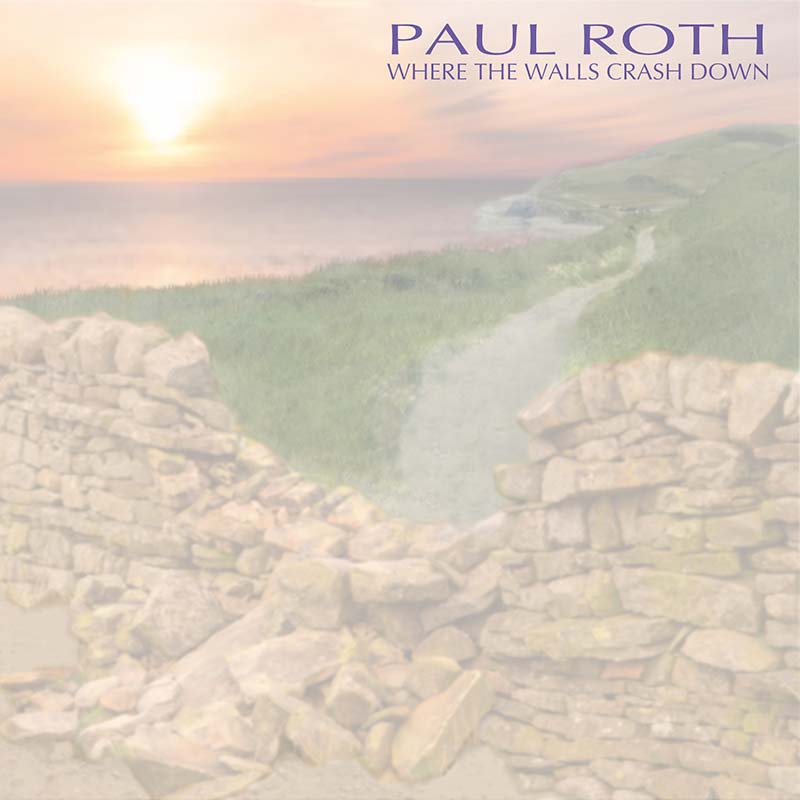
Where The Walls Crash Down, the latest album by Paul Roth, is a largely relatable record. Its 11 tracks cover romantic love, divinity, hypocrisy, self-doubt and ambition chasing. Roth is an Australian guitar-vocalist with Central Coast (NSW) roots, but is now permanently based in Hong Kong. While studying music at Wesley College, he kickstarted his gigging career, where he played guitar and provided backing vocals for original and cover artists. While he has played with multiple genres, folk-rock is his niche, with touches of country, jazz and gospel.
Since then, he has had a prolific resume. Aside from Hong Kong, he had performed in Australia, Japan and the Caribbean. Plus, he has extensive band experience from his time as a guitarist for local party band Indigo Town, and former member of Esimorp. Solo endeavour-wise, he has amassed 26 songs. This includes his preceding extended plays Remember This and Gold. His performance credits include opening for Day 1 of The Underground’s 21st Anniversary Festival, where he was hailed as a ‘quality opening act’. Furthermore, he was covered by the Australian Broadcasting Corporation’s unearthed page, and very recently in RTHK Radio 3.
Throughout the album, Roth’s guitar command is undeniable. It tenderly opens the intro track Hevel. Hevel comes from the Hebrew word for ‘vapour’, and is directly inspired by the first chapter in the book of Ecclesiastes. To quickly summarise, it states how quickly life goes by, and ponders the point in toiling hard for little reward. In the track, Roth ruminates over his ability to better the world, and blurs the lines between love and divine praise. The addressee can be interpreted as either or both his target of affection, and God, via his proclamations of lifelong praising devotion. At the end of the lyrics in each verse pre and post-chorus, he utilises an airy head voice that further bolsters the song’s appeal.
Track 2, Tell Me, he gestures to his romantic partner, who he addresses as Heaven-sent and entitled to his endless affection, regardless of if their surroundings are lackluster or bountiful. A violin guides the scene, and Roth croons alongside the instrumentals over a minute in, sweetening the tune. His vocal layering provide a haunting yet angelic impression. However, the line about ‘the joker said to me’ is a vague line, which is hard to understand without context.
The third track, The Problem, is the standout of the album. Its start is divergent to its preceding songs, with stuttering distortion which stays present in the first verses. Roth’s lyrics are stern, criticising the role of malicious content in tainting public consciousnesses with false messages. While challenging his addressee to ‘why not say what you really are’, his voice never raises, despite his earnest condemnation. His strumming after The Problem’s choruses are addicting, alternating between notes quickly without imposing chaos.
Following this, the six-minute-song Lullaby plays, opening with ripple-like synths which return as warbles after several verses. As implied by the title, its purpose is to soothe. He encourages, though never pressures, listeners to fulfill their life goals. His baritone voice advises with lines such as ‘wring the youthful years of its last juice’. The percussions employed are his banged-on guitar, and passionate drums in the final verse. It ends with a pleasant reverb which segues to Track 5, named 0004. A minute long, it stays consistently between two elements, that being the preceding warbles from the last song, and a later accompanying guitar which literally finishes on a high note. Due to the eventual shift toward an instrumental-dominated production, 0004 acts as a divider of sorts between this portion and the later half of Where The Walls Crash Down.
Track 6, Running, starts with synths, which are quickly replaced by excitable strums. It proclaims an urge to fully dissolve self-doubt, and to harbour a deathless drive. As Roth pleads ‘take me higher’, his voice ascends. In the final stanza, the production strips only to the guitar playing, which as a standalone already incites a faster heartbeat. A healthy ‘yeah’ graces the end, stretching with no tension toward the finish line.
This is now the segment where Roth discloses snippets of his personal life. Rest Of My Days was written to propose to his now-wife, hence why it immediately conjured imagery of white wedding clothes, wide banquet halls and couples dancing. He jubilantly welcomes his partner into Christian monogamy, ‘moving however God leads’. As he expresses excitement over spending adventurous and mundane time with her, trumpets blare mid-song, presciently celebrating the eventual spouses.
To Say Your Name is for his infant daughter. Roth’s vocals bounce in an echoey atmosphere, as though the listener is in a surround-sound chamber, seemingly reflecting his child in the womb. A xylophone is tinkered with as Roth soothingly sings ‘doo, doo, doo, doo’, after assuring his child he will love her forever.
Save The World is similar thematically with Rest Of My Days, and is noticeably country-inspired. A self-introduction to his partner, it is surprising he ordered this after his proposal track. He declares that even if he were a superman who could repair the world, he would still deem his partner the first person to testify this to. While he proclaims he loves what they say and do, this would have benefitted from specific examples to tie this with. In prior songs, vagueness was a benefit. In The Problem, it is easy to slot personal grievances with mainstream sensationalism. But in this instance, the listener does not know much about his partner besides their ‘big round eyes’.
Have It All follows Lullaby’s topic, surrounding Roth’s journey with self-doubt and challenging it. He juggles his want to fully commit to his musical career, while also understanding his former less successful attempts in trying. He frets ‘between the idealist and realist whose in the wrong’, but ultimately realises his might to try again, and chimes ‘you know it’s maybe worth fighting for.’ The bass playing is just as optimistically charged, rising and falling without losing energy.
The final gospel-tinged track Home remarks about the afterlife, where Roth awaits. Calling it a place ‘where pain is gone, every blemish, wrong wiped off forever,’ and where he can spend it with ‘you’ (implied to be God or his partner), he chants for home. His falsetto as he sings ‘evermore and evermore’ is gorgeous, and layered delicately. In the closing successive calls, the returning trumpets blare, jubilantly welcoming an inevitable arrival to Heaven. Due to the album’s thesis of walls crashing, the trumpets bring forth mental scenes of Jericho’s crumbled walls, which according to the Book of Joshua in the Old Testament, were destroyed after the Israelites played a ram’s horn, and shouted. It is used as an allegory of faith overcoming all obstacles to this day, which could have inspired this instrumental choice and album title.
There are some critiques about this record. His songwriting has some stellar lines like ‘be stronger as it’s in our dust’ in Tell Me, ‘resilience to break the mire’ in Running and the idealist-realist dichotomy mentioned in Have It All. Plus, his storytelling is clear. But it can fall into cliches, such as never letting a moment go, doing anything for love and seizing the day.
Furthermore, the drums employed in this are usually safe rather than exciting, with the exception being when they were played fast in Lullaby. Compared to Roth’s guitar expertise, it can feel more like a foundation over an aspect which seasons a track. But what Roth makes up for these limitations is his genuineness. In Lullaby, he provides a role of an experienced person, who relates to the tribulations of seeing little instantaneous reward, and yet knows investing effort into a goal is nevertheless worth it. And in To Say Your Name, prior to knowing the context of the song, it successfully gave the impression of a father awaiting his child.
Regardless of the listener’s creed or (including lack of) religion, they can find enjoyable sections in the album, especially if they like folk and country. Plus, beyond its heartwarming message to not relinquish one’s ambitions, it is a joyous story of a man’s domestic journey in the period between his last album and constructing this one.
Rock on, Paul Roth.
Review by Iplumoh Oct 2026


